
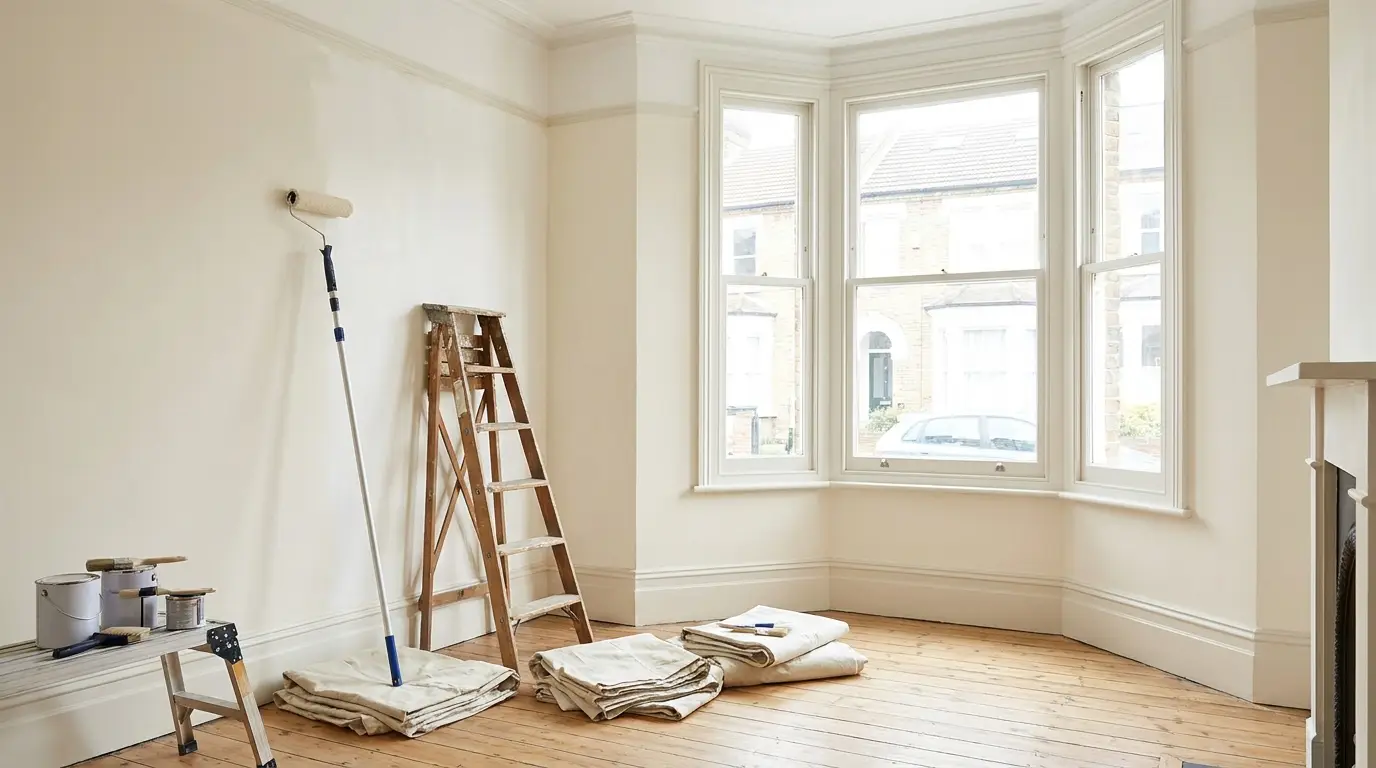
When you put a home on the market you'll almost always hear the same advice: "do it up, freshen the walls, change the flooring — and you'll sell faster and for more." In reality, though, not every renovation is worth the time or the money. Some jobs genuinely lift the value. Others just prettify the place without giving you your money back. And a third group can turn into an expensive mistake if nobody weighs up the risks beforehand. In this guide we'll explain which jobs pay off, which don't, and look at loft conversions and extensions — both especially popular in the UK.
When renovation pays off
UK buyers "feel" value in specific places — the kitchen, the bathroom, and the overall impression of cleanliness and light. That's exactly where it's worth investing first. Below are typical jobs, what they tend to cost, and what you can realistically expect in return.
| Job | Typical cost | Does it pay off? |
|---|---|---|
| Kitchen refresh (worktops, units, taps) | £3,000–£10,000 | Yes — one of the most important areas, +£5,000–£15,000 and a faster sale |
| Bathroom | £2,000–£7,000 | Yes — a clean, modern bathroom always appeals |
| Decoration and flooring (neutral tones) | £1,000–£3,000 | Partly — modest return, but a very strong first impression |
| Energy efficiency (windows, insulation, heating) | £3,000–£8,000 | Yes — a better EPC rating means lower bills for the buyer |
| Lighting and small details | £500–£2,000 | Partly — cheap, but it really improves the "sellable look" |
| Personal-taste design "for yourself" | varies | No — most buyers may not like it, adds no value |
When renovation doesn't pay off
There are situations where work simply burns money with no return. Spot them in advance:
- When the work is too expensive — if costs exceed 10–15% of the home's value, recouping it all is almost impossible.
- When there are serious structural problems — damp, roof, foundations. Cosmetics won't fix them, and the issue will surface anyway during a viewing or a survey.
- When there's barely any time to sell — major work will only push the sale back by weeks or months.
- When the market is slow or prices are falling — buyers won't pay extra for luxury at times like that.
- When you're renovating "for yourself" — highly individual design narrows your pool of buyers rather than widening it.
Cosmetics never hide serious problems for long. UK buyers often commission a survey, which reveals damp, cracks or roof defects. If that comes to light after an offer, the negotiation shifts against you — or the deal collapses altogether. It's far better to disclose the issue upfront and adjust the price than to try to mask it with a coat of paint.
A practical pre-sale strategy
If you decide to renovate, work from the fundamentals up to the finishing touches — not the other way round.
1. Set a budget
- Allow up to 5–10% of the home's value for the work.
- Keep roughly a 5% contingency for unexpected jobs — there are nearly always some.
2. Start with the basics
- Neutral wall colours.
- Tidy flooring.
- A sorted kitchen and bathroom, even if only minimally.
3. Improve energy efficiency
- Check the windows are sealed.
- Top up the loft insulation.
- If possible, update the heating system.
4. Aesthetics and first impressions
- A bright, tidy interior.
- Less furniture and clutter — more of a sense of space.
- Quality lighting and professional photos. A good photographer (or video tour) works wonders for the listing.
Renovation before selling is a tool, not a cosmetic. It pays off when you invest where the buyer actually looks — not where you happen to like it.
Loft conversions
A loft conversion turns the attic into liveable space. In the UK it's one of the most popular renovations, because it adds an entire extra room or even a bathroom.
- Velux (rooflights only) — £15,000–£25,000.
- Dormer conversion — £20,000–£40,000.
- Hip-to-gable — £30,000–£50,000.
- Mansard — £50,000–£70,000+.
Value typically increases by 10–20% of the total home price. For example, on a £300,000 home a dormer conversion (~£35,000) could add £45,000–£60,000. It's especially worthwhile if the home only has two bedrooms and the loft would give it a third, or if extra space is highly prized in the area.
Extensions
An extension is where you add new space to the house: enlarging the kitchen or living room, or adding a room on the ground floor.
- Small rear extension (~3×3 m) — £25,000–£40,000.
- Larger single-storey extension — £40,000–£70,000.
- Two-storey extension — £60,000–£120,000+.
Value typically increases by 15–25%. If you turn a two-bedroom home into a three-bed, the value jumps even more sharply. This pays off best when larger homes in the area cost considerably more, you have room on the plot, and you plan to stay for at least a few years.
A real-world example
A two-bedroom flat in London in average condition (~£350,000). The owner carried out the following work:
- Redecoration and neutral walls — £1,500.
- New flooring — £2,500.
- Kitchen refresh — £3,000.
- Bathroom refresh — £2,000.
- Dormer-style loft conversion with an extra room — £35,000.
Total spend was around £44,000. The result: the market value rose by £60,000–£75,000, the time to sell more than halved, and the home went from a two-bed to a three-bed — automatically moving up into a higher, more lucrative buyer bracket.
Quick reference
- Pays off: kitchen, bathroom, neutral decoration, flooring, energy efficiency, extra space (lofts, extensions).
- Doesn't pay off: work with no plan, spending more than you can recoup, cosmetics over serious problems.
- The golden rule: a budget of up to 5–10% of the value plus a 5% contingency.
Before you start knocking through walls and buying tiles, it's worth having an agent who'll tell you what genuinely lifts the price in your particular area. More on adding value to your home → And once you're ready to negotiate, don't forget which mistakes cost the most — the most common negotiation mistakes →