
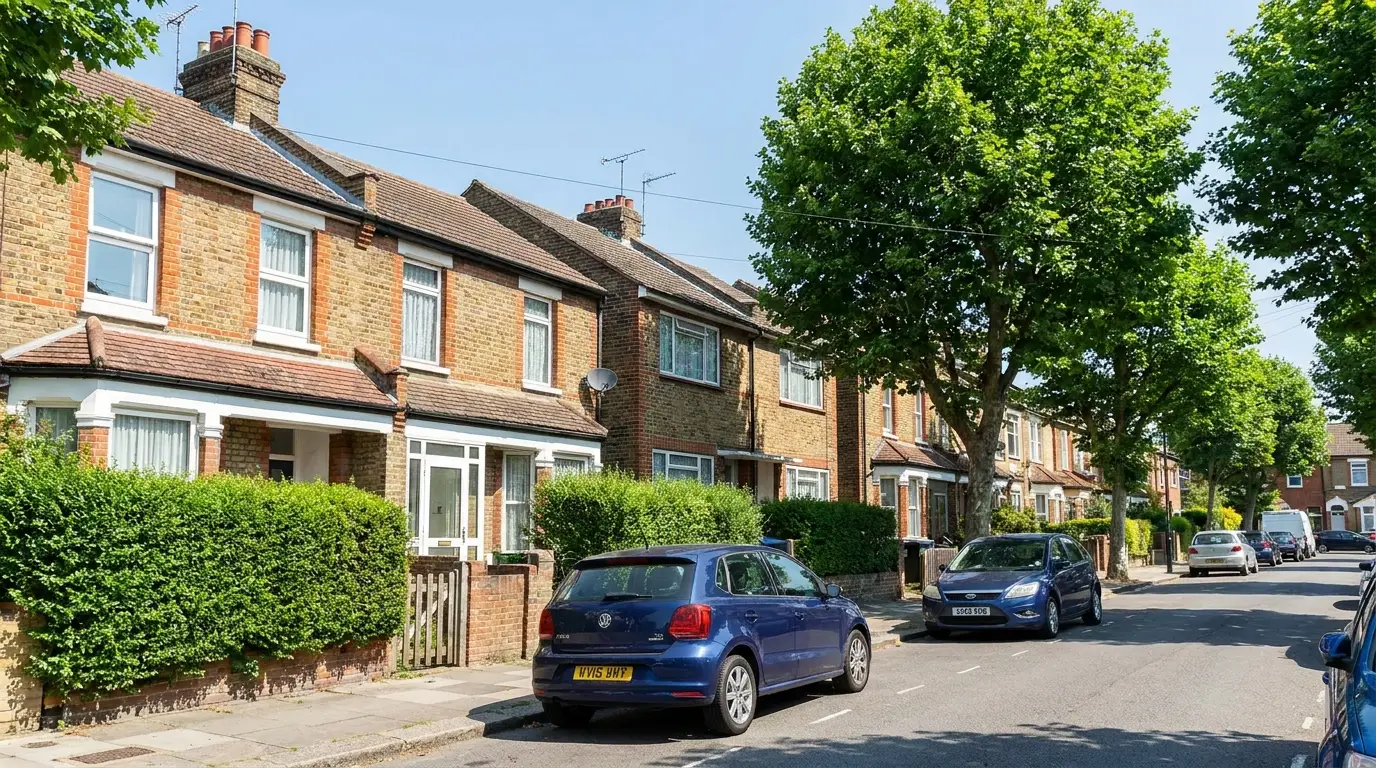
Central London prices have been climbing for years, and even buyers on a solid income often find a flat in the heart of the city stays just out of reach. So more and more people are looking outward — to the suburbs, where prices are lower, space is greater, and the link into town is still easy. In this guide we explain why a suburb is worth considering, what to look out for, and where you can realistically still afford to buy — with examples from our own patch, Havering.
Why look at the suburbs?
The suburbs are no longer just a "cheaper, but further out" compromise. For many families they're a deliberate choice about quality of life. Here are the main reasons:
- Affordability. For the same money that would buy a small studio in the centre, the suburbs will often get you a flat with a couple of bedrooms — or even a house with a garden. The exact difference depends on the market.
- More space. For families with children this matters enormously — more living space, more privacy, and often a garden of your own.
- Good transport links. Projects like the Elizabeth line (formerly Crossrail) have cut journey times into the centre considerably, so areas further out have become a genuine alternative.
- Quality of life. More greenery, more parks, less noise, closer-knit communities and infrastructure built around families.
A young couple with a £350,000 budget would, in the centre, find little more than a small studio. Looking out to the suburbs instead, they might find a two-bedroom flat for less, with a short walk to the station — more space and often lower monthly costs too. Exact prices depend on the market and can change, so it's always worth checking the latest listings in the area.
Havering — our corner on London's edge
We're based in Havering, so we know this part of the world up close. It's one of those areas where the link to the capital still sits comfortably alongside suburban prices and calm. A few examples of how the feel of a place can change:
- Romford. A growing, lively centre with an Elizabeth line station — the journey into town is now far more convenient. It appeals to anyone who values transport and a bit of everyday buzz.
- Hornchurch. A quieter, family-friendly setting with a lively High Street and its own theatre. It's also where our office is.
- Upminster. A blend of greenery, well-regarded schools and roomier homes — popular with families looking for a long-term base.
Prices across these areas vary and depend on the market and the specific property, so don't treat them as fixed — it's best to check current listings before you decide.
A suburb today isn't a trade-off between price and place — increasingly it's a deliberate choice for space, calm and long-term value.
For investors — where the opportunities are
The suburbs are attractive not just to live in, but to invest in. A few directions worth looking at:
- New-build developments. These often come with more favourable terms for buyers and lower up-front refurbishment costs, though they can carry higher service charges.
- Buy-to-let. Rental yields in the suburbs are often higher than in the centre, because purchase prices are lower while rental demand stays steady. More on this in our buy-to-let guide.
- "Up-and-coming" areas. Places where prices aren't high yet, but new transport hubs, schools or retail are planned, tend to appreciate over time. A good example of how new lines affect value is set out in our Elizabeth line investment guide.
Tips for buyers
When you're choosing a suburb, it's important to look beyond price to the things that shape a home's value and your day-to-day comfort:
- Pay attention to transport. If it's a 10–15 minute walk to the station, that home is more appealing and usually easier to sell on later.
- Check the schools and the community. Good school ratings often lift prices across a whole area, while safety and reputation matter for long-term value.
- Count all the costs. A cheaper home further out can sometimes mean higher monthly travel costs — factor in fares, fuel and time.
- Take the long view. If you're planning to live there for 5–10 years, the market is likely to rise. For shorter-term plans, more established areas are the safer bet.
We know Havering — Romford, Hornchurch, Upminster and the surrounding areas — so we'll help you pick a neighbourhood to suit your budget, your commute and your lifestyle. We'll explain how the areas differ, work out your realistic monthly costs, and show you current listings — all in English or Lithuanian, with no obligation.
Quick reference
- Affordability: in the suburbs, the same money buys more space than in the centre.
- Transport: the Elizabeth line and other routes have shortened the journey into town.
- Weigh up the location: station, schools, safety and planned investment.
Prices and the market change, so before you decide it's always worth checking the latest information — or having an agent who knows the area. Back to the guides for more reading →